 Mew Gull Larus canus canus; heinei; kamtschatschensis; brachyrhynchus
(last update: March 12, 2012)
Mew Gull (Larus canus) adult: September - October
description
Mew Gull has a partial moult in spring. It starts
in February and is completed by April, leaving birds in so-called "adult
summer" plumage. The head turns white, with a red
orbital ring. The bill turns all yellow or yellowish-green. In summer, head, neck, tail and under-parts are completely
white. The upper-parts are medium grey.
The outer primaries are black with large white tips. The inner primaries
and secondaries are pale grey with a white tip, creating a white trailing
edge. The white crescents on the tertials are very broad.
Adult brachyrhychus normally have a black sub-terminal band on P5-P10. Between this
black band and the grey centre, a large white spot is visible both
from above and below on P5-P7, creating a string of pearls on these
primaries. P9 and P10 show large white mirrors.
Differences heinei vs canus (Frank Majoor)
* Biometrics. Heinei is slightly larger than canus, although there is a range of overlap, especially between small female heinei and large male canus.
* Head profile. Heinei has a more angular head, with sloped forehead (not unlike Herring Gull) while normally canus has a more friendly rounded head profile, with steep forehead.
* Heinei has a longer wing, often obvious in the field. The build is more like Iceland Gull with hanging wings.
* The upperpart grey tone is slightly darker in heinei, with Kodak Grey Tone 6-8, while canus has Kodak Grey Tone 5-6(7).
* The trailing edge of the secondaries and primaries is slightly different, especially the extent of white tips on inner primaries (only noticable in the hand or flight shots.
* 1st winter heinei have the tail-band slightly broader than canus, and the median and lesser coverts are darker than canus.
This combination of biometrics and characteristics make it readily possible to have correct ssp ID in the field, when birds are in the hand. However, there is a known zone in W Russia, where birds gradually change in phenotypics, so definite ssp ID is only possible when birds have been ringed as pullus.
 |
 |
 |
 |
 |
 |
 |
 |
 |
 |
 |
 |
Open wing differences heinei vs canus (Chris Gibbins)
In full adult plumage, open-wing images can be checked on several subbtle points, which, in combination, may result in a fairly different wingtip pattern for heinei: in general showing more pigmentation. Also, the grey upperparts may be distinctly darker than canus and lack their blue tone. Details in the wingtip are key.
(i) heinei more often show a deep black full subterminal band on P5; where canus normally has a thin, uneven or broken band, or black only on one web. Sometimes, full adult heinei may show a black spot on the outer-web of P4;
(ii) in heinei, black pigmentation extends all the way to the primary coverts on P8, where canus only has this black reaching 50-75% of the primary;
(iii) heinei shows extensive black on P7 (more than 80% of the way to the primary coverts); while canus has mostly less than 50%;
(iv) a long black 'bayonet' on the outer web of P6 extends for approximately 65% of the way to the primary coverts in heinei , while the maximum in Chris's canus sample is 53%, with most having black only 20-40%.
The overall result of these details is a wingtip that has a lot more black and less white than canus.

Upperpart grey tone: |
||||
| delawarensis | 3-4(5) | Malling Olsen & Larsson | 4-5 | Howell & Dunn |
| canus | 5-6(7) | Malling Olsen & Larsson | 5-6.5 | Howell & Dunn |
| brachyrhynchus | 5.5-7.5 | Malling Olsen & Larsson | 6-7.5 | Howell & Dunn |
| heinei | 6-8 | Malling Olsen & Larsson | 5.5-7 | Howell & Dunn |
| kamtschatschensis | 6-9 | Malling Olsen & Larsson | 6.5-8 | Howell & Dunn |
"brachyrhynchus" Mew Gull adult Sept - October
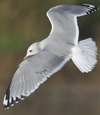 Mew Gull brachyrhynchus adult, October 10 2008, Richmond, BC. Picture: Punkbirder.
 Mew Gull brachyrhynchus adult, October 25 2015, Sandspit, BC. Picture: Cameron Eckert.
 Mew Gull brachyrhynchus adult, October 10 2016, Balaklava Island, BC., Canada. Picture: Ivan P. Dubinsky.
 Mew Gull brachyrhynchus adult, October 06 2016, Balaklava Island, BC., Canada. Picture: Ivan P. Dubinsky.
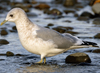 Mew Gull brachyrhynchus adult, September 25 2006, Ship River, Anchorage, Alaska. Picture: Greg Forcey.
 Mew Gull brachyrhynchus adult, October 21 2015, Ambleside Beach - Vancouver, BC. Picture: Pierre Cenerelli.
 Mew Gull brachyrhynchus adult, September 01 2012, Lutak channel, near Haines, Alaska. Picture: Alan Vernon.
 Mew Gull brachyrhynchus adult, September 08 2012, Haines, AK. Picture: Alan Vernon.
 Mew Gull brachyrhynchus adult, September 08 2012, Lutak channel, near Haines, Alaska. Picture: Alan Vernon.
 Mew Gull brachyrhynchus adult, October 21 2016, Lake Coeur d'Alene, Idaho. Picture: Joshua P. Little.
"canus" Mew Gull adult September - October
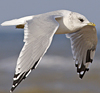 Mew Gull canus NLA 3.610.992 adult, October 13 2015, Katwijk, the Netherlands.
 Mew Gull canus adult, October 21 2016, Grou, the Netherlands.
 Mew Gull canus adult, September 28 2015, IJmuiden, the Netherlands.
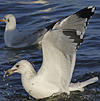 Mew Gull canus adult, October 19 2016, Grou, the Netherlands.
 Mew Gull canus adult, October 19 2016, Grou, the Netherlands.
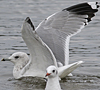 Mew Gull canus adult, October 19 2016, Grou, the Netherlands.
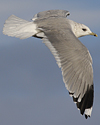 Mew Gull canus adult, October 21 2016, Grou, the Netherlands.
 Mew Gull canus adult, October 19-21 2016, Grou, the Netherlands.
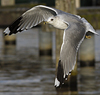 Mew Gull canus adult, October 21 2016, Grou, the Netherlands.
 Mew Gull canus adult, October 21 2016, Grou, the Netherlands.
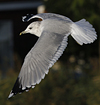 Mew Gull canus adult, October 19 2016, Grou, the Netherlands.
 Mew Gull canus adult, October 21 2016, Grou, the Netherlands.
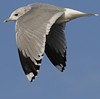 Mew Gull canus adult, October 21 2016, Grou, the Netherlands.
 Mew Gull canus adult, October 19-21 2016, Grou, the Netherlands. Large mirror on P9.
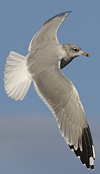 Mew Gull canus adult, October 21 2016, Grou, the Netherlands.
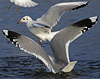 Mew Gull canus adult, October 21 2016, Grou, the Netherlands.
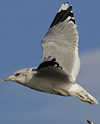 Mew Gull canus adult, October 21 2016, Grou, the Netherlands.
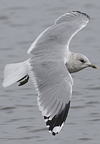 Mew Gull canus adult, October 23 2016, Grou, the Netherlands.
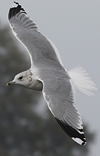 Mew Gull canus adult, October 23 2016, Grou, the Netherlands.
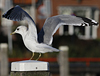 Mew Gull canus adult, October 21 2016, Grou, the Netherlands.
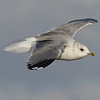 Mew Gull canus adult, October 21 2016, Grou, the Netherlands.
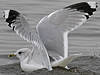 Mew Gull canus adult, October 22 2016, Grou, the Netherlands.
 Mew Gull canus adult, October 23 2016, Grou, the Netherlands.
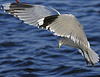 Mew Gull canus adult, October 19 2016, Grou, the Netherlands.
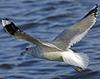 Mew Gull canus adult, October 19 2016, Grou, the Netherlands.
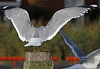 Mew Gull canus adult, October 21 2016, Grou, the Netherlands.
 Mew Gull canus adult, October 23 2016, Grou, the Netherlands.
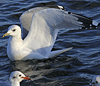 Mew Gull canus adult, October 19 2016, Grou, the Netherlands.
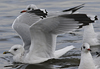 Mew Gull canus adult, October 23 2016, Grou, the Netherlands.
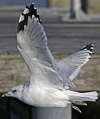 Mew Gull canus adult, October 21 2016, Grou, the Netherlands.
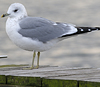 Mew Gull canus adult, October 23 2016, Grou, the Netherlands.
 Mew Gull canus adult, October 23 2016, Grou, the Netherlands.
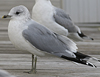 Mew Gull canus adult, October 23 2016, Grou, the Netherlands.
 Mew Gull canus adult, October 21 2016, Grou, the Netherlands.
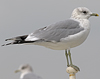 Mew Gull canus adult, October 22 2016, Grou, the Netherlands.
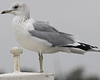 Mew Gull canus adult, October 22 2016, Grou, the Netherlands.
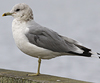 Mew Gull canus adult, October 22-23 2016, Grou, the Netherlands.
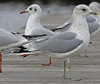 Mew Gull canus adult, October 22 2016, Grou, the Netherlands.
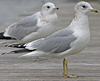 Mew Gull canus adult, October 22 2016, Grou, the Netherlands.
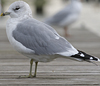 Mew Gull canus adult, October 23 2016, Grou, the Netherlands.
 Mew Gull canus adult, October 23 2016, Grou, the Netherlands.
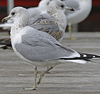 Mew Gull canus adult, October 22 2016, Grou, the Netherlands.
 Mew Gull canus adult, October 23 2016, Grou, the Netherlands.
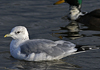 Mew Gull canus adult, October 21 2016, Grou, the Netherlands.
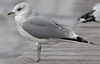 Mew Gull canus adult, October 22 2016, Grou, the Netherlands.
"heinei" Mew Gull adult September - October
 Mew Gull heinei adult, October 09 2015, Karabalyk, NW Kazakhstan. Picture: Yuriy Malkov.
 Mew Gull heinei adult, September 12 2014, Uzynagash, N Kazakhstan. Picture: Ivan Zubak.
 Mew Gull heinei adult, October 29 2014, Aktau, W Kazakhstan. Picture: Askar Isabekov.