 Common Gull Larus canus canus & L.c. heinei
(last update: March 12, 2012)
Common Gull (Larus canus) adult April - August
Common Gull is a widespread species on the northern hemisphere with several sub-species: in N America brachyrhynchus,
in W Europe nominate canus, in W Asia and Russia heinei and in the Far
East sub-species kamtschatschensis.
The American race brachyrhynchus is a breeding bird of
Alaska, the American West coast and inland Canada. After the
breeding season, it disperses south along the coast to California. Brachyrhynchus can be readily told from nominate canus, and therefore
sometimes considered a full species: Mew Gull. The differences can
be found in the bill (in some birds obviously small), but most in
plumage.
Nominate canus is a common breeding bird in North Europe, wintering both in the breeding area and slightly south, to the northern coast of the Mediterranean.
The race heinei breeds from White Russia eastwards to central
Mongolia, in a broad band over the tundra region of inland U.S.S.R.
It can be found wintering in the central Asian states, southern
Black Sea and Caspian Sea and further south to the Persian Gulf.
Part of the eastern population of heinei may follow a more
eastern route to the coast of China.
Race kamtschatschensis breeds in eastern Siberia and, as the
name indicates, Kamtschatcha. In winter it moves southwards along
the coast, wintering in Japan, the Korea's and China. It is the
largest race, almost as large as Herring Gull. The description below largely follows from P.J. Grant: "Gulls, a guide to identification".
ADULT COMMON GULL
Common Gull has a partial moult in spring. It starts
in February and is completed by April, leaving birds in so-called "adult
summer" plumage. The head turns white, with a red
orbital ring. The bill turns all yellow or yellowish-green. In summer, head, neck, tail and under-parts are completely
white. The upper-parts are medium grey.
The outer primaries are black with large white tips. The inner primaries
and secondaries are pale grey with a white tip, creating a white trailing
edge. The white crescents on the tertials are very broad.
Adult brachyrhychus normally have a black sub-terminal band on P5-P10. Between this
black band and the grey centre, a large white spot is visible both
from above and below on P5-P7, creating a string of pearls on these
primaries. P9 and P10 show large white mirrors.
Measurements in mm's:
wing canus: 320-385 (Dwight), 321-380 (Birds of West. Paleartic III),
tail: 124-148, bill: 30-38,
tarsus: 48-58; n = 16 (Dwight, 1925);
wing heinei: 351-395 (BWP III);
wing brachyrhynchus: 328-366 (Dwight 1925);
wing kamtschatschensis: 365-412 (BWP III).
(The above mentioned data have different sources and probably different measuring techniques. It is therefore better to take the tables from Malling Olsen & Larsson, comparative differences much less likely to be contaminated by differences in techniques, on THIS PAGE.)

Upperpart grey tone: |
||||
| delawarensis | 3-4(5) | Malling Olsen & Larsson | 4-5 | Howell & Dunn |
| canus | 5-6(7) | Malling Olsen & Larsson | 5-6.5 | Howell & Dunn |
| brachyrhynchus | 5.5-7.5 | Malling Olsen & Larsson | 6-7.5 | Howell & Dunn |
| heinei | 6-8 | Malling Olsen & Larsson | 5.5-7 | Howell & Dunn |
| kamtschatschensis | 6-9 | Malling Olsen & Larsson | 6.5-8 | Howell & Dunn |
canus - on location or origin
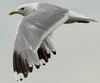 Common Gull canus adult EN37 July 27 2010, Zoetermeerseplas - Zoetermeer, The Netherlands. Picture: Maarten van Kleinwee.
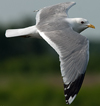 Common Gull canus adult EN58 July 23 2009 & June 17 2010, Zoetermeer, The Netherlands. Picture: Maarten van Kleinwee.
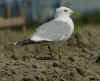 Common Gull canus adult E419 June 22 2003, Dintelhaven - Maasvlakte, the Netherlands.
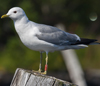 Common Gull canus adult A738 July 28 2012, White Sea - Karelia, Russia. Picture: Peter Vorotnikov.
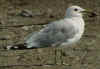 Common Gull canus HES T-117.62? July 16 2004, Tampere, Finland (61.31N,
23.43E).
Common Gull canus HES T-117.62? July 16 2004, Tampere, Finland (61.31N,
23.43E).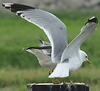 Common Gull canus NLA 3.720.093 5CY, May 11 2016, Europoort - Dintelhaven, the Netherlands (51.57 N 4.06 E).
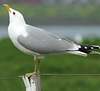 Common Gull canus NLA 3.715.531 5CY, May 11 2016, Europoort - Dintelhaven, the Netherlands (51.57 N 4.06 E).
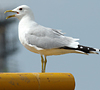 Common Gull canus NLA 3.730.114 5CY, May 11 2016, Europoort - Dintelhaven, the Netherlands (51.57 N 4.06 E).
 Common Gull canus NLA,
May 16 2004, Dintelhaven - Maasvlakte, the Netherlands.
Common Gull canus NLA,
May 16 2004, Dintelhaven - Maasvlakte, the Netherlands.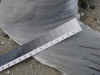 Common Gull canus adult, June 02 2003, Vuurtorenvlakte - Maasvlakte, the Netherlands.
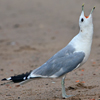 Common Gull canus adult, August 13 2013, St Petersburg, Russia. Picture: Marina Yolkina.
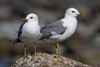 Common Gull canus adult, June 07 2008, Listed, Bornholm, Denmark. Picture: Steen E. Jensen.
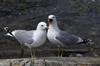 Common Gull canus adult, July 13 2008, Oscarsborg Festning, Norway. Picture: Morten Winness.
 Common Gull canus adult, April 19 2006, Bergen, Norway. Picture: Frode Falkenberg.
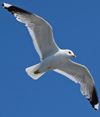 Common Gull canus adult, June 30 2009, Solovetsky, Arkhangelrskaya Oblast, Russia. Picture: Juha Mäkeläinen.
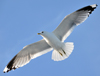 Common Gull canus adult, May 28 2009, Oyatevshchina, Kareliya, Russia. Picture: Christian Senger.
 Common Gull canus adult, July 14 2001, IJmuiden, the Netherlands.
 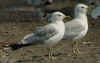 Common Gull canus adult, July 16 2004, Tampere, Finland (61.31N,
23.43E).
Common Gull canus adult, July 16 2004, Tampere, Finland (61.31N,
23.43E).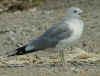 Common Gull canus adult, July 16 2004, Tampere, Finland (61.31N,
23.43E).
Common Gull canus adult, July 16 2004, Tampere, Finland (61.31N,
23.43E). Common Gull canus adult, April
22 2002, Dintelhaven, Maasvlakte, the Netherlands.
Common Gull canus adult, April
22 2002, Dintelhaven, Maasvlakte, the Netherlands.heinei - on location
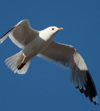 Common Gull heinei adult, June 02 2013, Novosibirskaya Oblast, Western Siberia, Russia. Picture: Sergey Pisarevskiy.
 kamtschatschensis - on location
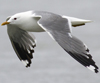 Common Gull kamtschatschensis adult, June 21 2013, Kamchatka/Chukotka Coast, Russia. Picture: Benjamin van Doren.
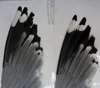 Common Gull kamtschatschensis adult, July 22 1992, Kamchatka, Russia, Steve Hampton.
 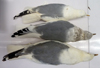 Common Gull kamtschatschensis adult, July 22 1992, Kamchatka, Russia, Steve Hampton.
Mew Gull brachyrhynchus - on location
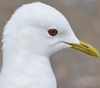 Mew Gull brachyrhynchus, June 14 2012, Denali NP, Alaska. Picture: Glenda Suebee.
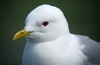 Mew Gull brachyrhynchus adult, June 27 2013, Potter Marsh, Anchorage, AK. Picture: Marg Higbee.
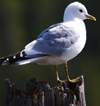 Mew Gull brachyrhynchus adult, May 10 2010, Yukon Territory, CA. Picture: Keith Williams.
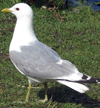 Mew Gull brachyrhynchus adult, July 08 2012, Spenard Crossing in Anchorage, Alaska. Picture: Brian Henderson.
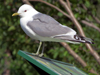 Mew Gull brachyrhynchus adult, July 08 2012, Spenard Crossing in Anchorage, Alaska. Picture: Brian Henderson.